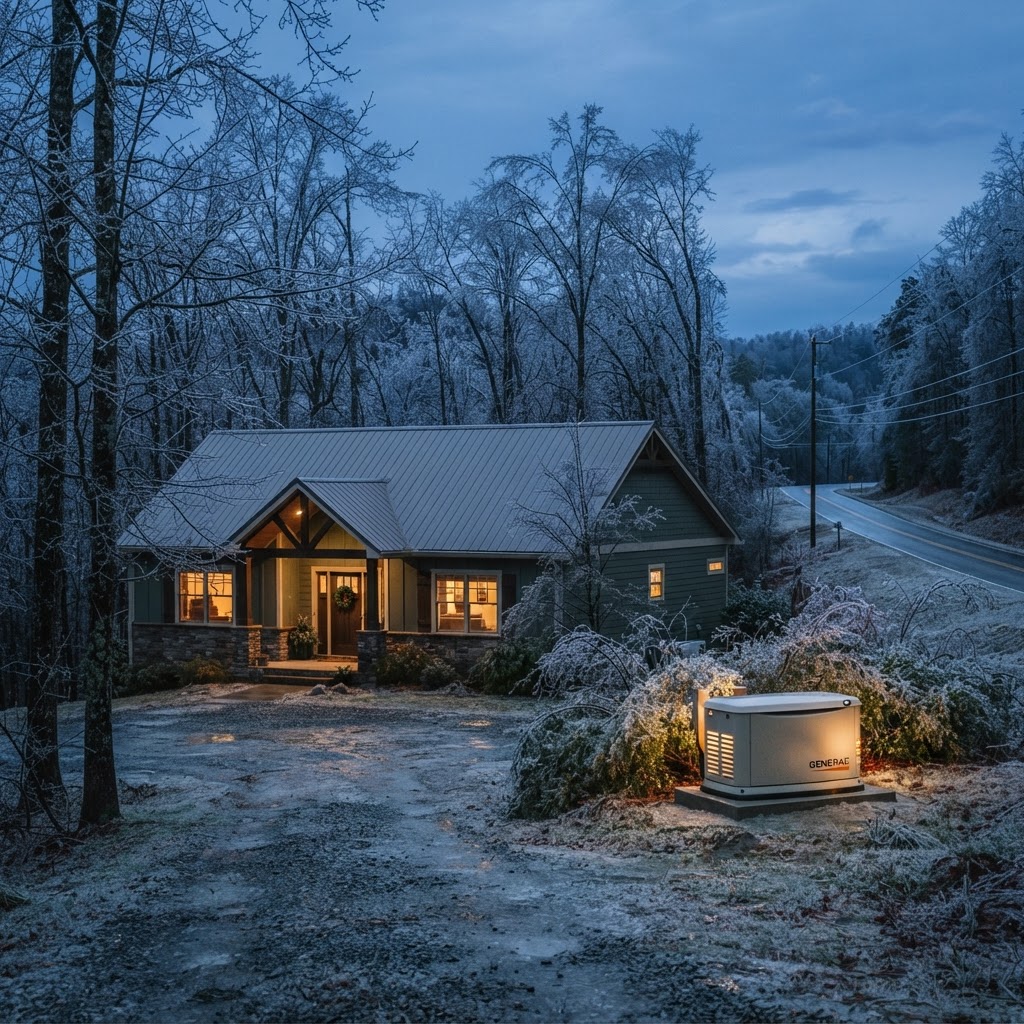
Whole-house generator installation in Mount Airy, NC is one of those upgrades that stops sounding optional the first time you go three days without power. When Hurricane Helene's remnants tore through the western Piedmont and foothills in September 2024, Surry County homes sat in the dark while crews worked the bigger corridors first. Winter brings the other hazard: freezing rain that glazes the escarpment and snaps lines along the NC 89 and Highway 52 corridors. Rural circuits get restored last — that's just how the math works for the utility.
Quick answer: A licensed North Carolina electrician performs a load calculation on your panel, sizes a standby generator to your actual circuits (typically 18–26 kW for a whole-house Mount Airy home), pulls the Surry County permit, installs the automatic transfer switch, coordinates the propane or natural gas supply, and commissions the unit so it passes its first self-test before anyone leaves your driveway.
Why outages hit Surry County homes harder
Mount Airy sits where the Piedmont meets the Blue Ridge foothills, and the weather here plays both sides: hurricane remnants coming up from the Gulf and ice storms that form right along the elevation change. Add rural line miles and older housing stock, and two things follow. First, outages are more frequent than in Winston-Salem's denser grid. Second, many homes outside town run on well water — when the power is out, so is the pump, which means no showers, no toilet refills, and no water for pets or livestock until the line comes back.
A whole-house standby generator solves both problems automatically: it senses the outage, starts itself, and transfers your loads within about 30 seconds — including the well pump, furnace, and refrigerator. Nobody rolls a portable unit out of the garage in the rain at 2 a.m. and runs extension cords through a cracked door.
What size whole-house generator does a Mount Airy home need?
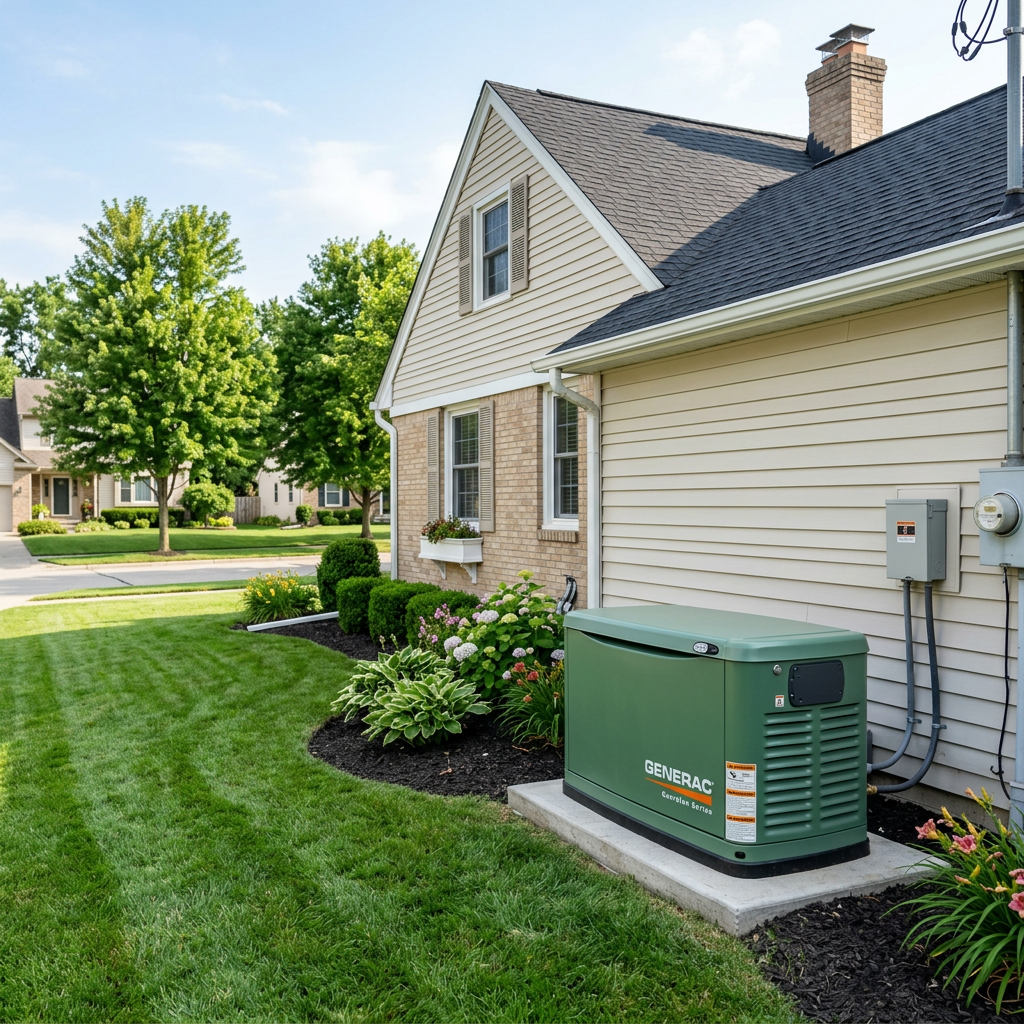
Direct answer: Most 2,000–3,000 sq ft homes here land on a 20–26 kW air-cooled standby unit (a 22 kW Generac Guardian is the most common choice in the Triad region). The honest number comes from a load calculation on your actual panel — not a square-footage guess.
Three details matter more than the brochure:
- Well pumps have a starting surge. An older 3-wire pump can demand two to three times its running watts for a split second. The generator and transfer switch have to be sized for that spike, or you'll trip the unit every time the pump kicks on.
- Load management modules stretch a smaller unit. A 22 kW generator with load-shedding controls can cover a house that "should" need 26 kW — the controller temporarily drops the water heater or a second AC zone when big loads start. That's often the smarter buy than paying for extra kilowatts you use four days a year.
- A soft starter on the AC compressor can cut the compressor's starting draw by more than half, sometimes letting a smaller generator carry central air after all.
Natural gas or propane around Mount Airy?
Some in-town Mount Airy addresses have natural gas at the meter, but once you're outside the mains — which is most of Surry County — propane is the norm, and many homes already have a tank for heat or cooking. Both fuels run a standby generator well; the difference is tank sizing. A 22 kW unit burns roughly 3–4 gallons of propane per hour at full load, closer to 2 at half load, so a generator-only household sizing for multi-day ice-storm outages wants a 250–500 gallon tank. Your installer coordinates with the propane supplier so the regulator and line can feed the generator without starving the furnace — a gas line that's too small is the most common corner-cut we find when we're called out to fix someone else's installation.
What installation involves — and the Surry County permit
Standby generator installation is permitted electrical work in Surry County (and inside Mount Airy city limits), and it's inspected. The sequence:
- Site visit and load calculation: panel size, circuits, fuel availability, placement.
- Placement: manufacturers require at least 5 feet from windows, doors, and intake vents, 18 inches from the house for service access, on a concrete pad — never dirt or gravel, because a pad that settles cracks the fuel line and conduit.
- Transfer switch and wiring: the automatic transfer switch ties in at the panel with proper neutral-ground bonding.
- Fuel connection: new propane line or a natural gas meter upgrade, coordinated with the supplier.
- Inspection and commissioning: the county inspector signs off, then the unit runs its first supervised self-test.
Skipping the permit isn't a shortcut — it's a problem at resale and a possible insurance complication. A licensed electrician pulls it as a matter of course.
What whole-house generator installation costs in 2026
| Scope | Typical range (2026) |
|---|---|
| Generator only — 20–22 kW air-cooled standby | $5,000–$6,500 |
| Installation labor, transfer switch, pad, permits | $3,000–$5,500 |
| Propane tank or gas-line work (if needed) | $500–$2,500 |
| Turnkey whole-home install (20–22 kW) | $9,000–$14,000 |
Larger liquid-cooled units for big houses or shops run $15,000–$25,000 and up. Delivery lead times stretch during hurricane season, so fall and winter — after everyone just lived through an outage — is when you wait longest. The only honest number is a written scope after a site walk, never a phone estimate.
Signs your generator needs repair
Standby units exercise themselves weekly, so when something's wrong, they usually tell you:
- The unit fails its weekly exercise or won't auto-start during a real outage.
- Controller error codes (low oil pressure, overcrank, overspeed) that keep returning.
- It runs, the house loses power anyway — usually a transfer switch fault, not the generator.
- Hard starting, unusual vibration, coolant or oil spots under the enclosure.
- The battery. A dead or weak starting battery is the single most common standby generator repair we see — the unit sits for months, the battery sulfates, and the first real outage is when you find out.
Any burning smell or fuel odor means shut it down and call for service immediately.
Maintenance that prevents most generator repairs
Annual service covers it for most homes: oil and filter change (the 100–200 hour interval usually arrives once a year for a standby unit), air filter, spark plugs on schedule, battery load test, coolant level and condition, valve check at the manufacturer's interval, fuel-line inspection, and a load-bank or load test so the unit proves it can actually carry the house. Between visits, keep the enclosure clear of leaves, pine straw, and snow drift, and confirm the weekly exercise cycle is running — a monitoring app makes that a 10-second check from the couch.
How to choose an electrician for generator work in Mount Airy
Verify the North Carolina electrical license and insurance, ask how many standby installs they've completed in the region in the last two years, and confirm they handle both the electrical side and the fuel-line coordination — the installs that fail inspections usually went through a seller who subcontracted the wiring to whoever was free that week. A legitimate generator electrician insists on a site visit and a load calculation before quoting, explains the permit up front, and leaves you with the inspection paperwork when the job's done.
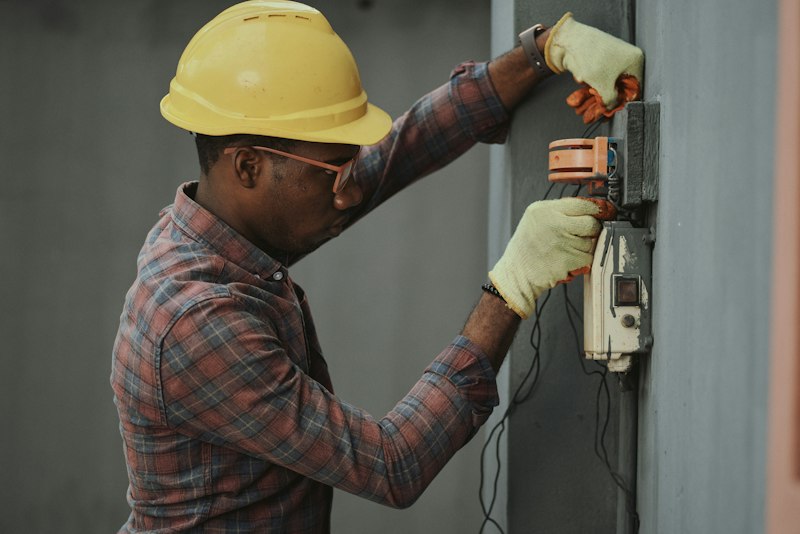
Dausman Electric installs and services whole-house standby generators for homeowners across the greater Piedmont Triad, with generator installation and repair available for Mount Airy and Surry County properties. Visit Dausman Electric or browse our electrical blog for more Triad guides.
Frequently asked questions
How much does a whole-house generator cost installed near Mount Airy?
A turnkey 20–22 kW standby installation typically runs $9,000–$14,000 in 2026, including the generator, automatic transfer switch, pad, permit, and labor. Propane tank work or long gas-line runs add $500–$2,500; larger liquid-cooled systems run $15,000–$25,000+.
Do I need a permit for a generator in Surry County?
Yes. Standby generator installation is permitted electrical work, inspected whether you're in Mount Airy city limits or unincorporated Surry County. Your licensed electrician pulls the permit and schedules the inspection.
Can a generator run a well pump?
Yes, when the system is sized for the pump's starting surge. Well pumps draw two to three times their running watts at startup, so the generator and transfer switch must handle that spike. This is exactly what a load calculation catches.
What's the most common standby generator repair?
Starting-battery failure, by a wide margin. Units sit idle between weekly exercise cycles, batteries sulfate, and the first outage reveals it. Annual service with a battery load test prevents most no-start callouts.
How long does installation take?
The on-site work usually takes two to four days across two visits: pad, transfer switch, and wiring first; then the fuel connection, inspection, and commissioning. Equipment delivery lead times — not the labor — are what stretch hurricane-season timelines.