Generator Installation Near Me: Complete Guide
If you're searching for "generator installation near me," you're taking an important step toward protecting your home or business from power outages. Whether you're looking for a portable generator solution or a permanent whole-home standby system, understanding the installation process helps you make informed decisions and set proper expectations.
Why Professional Generator Installation Matters
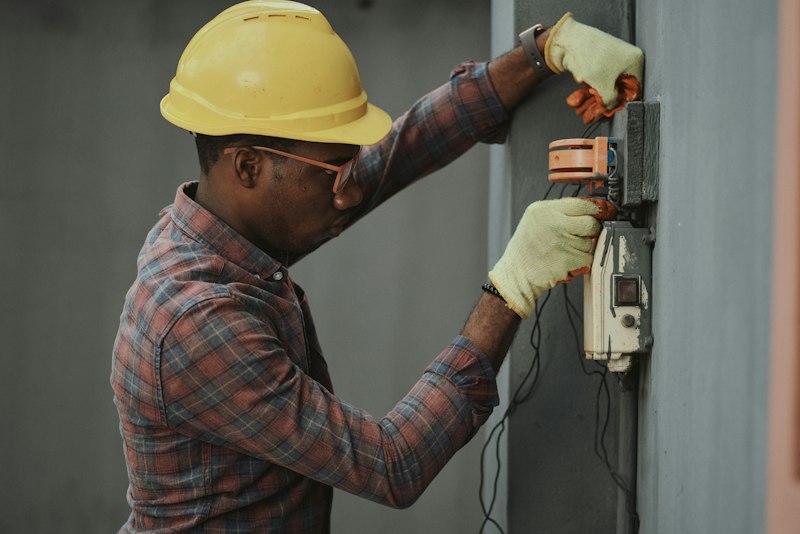
While it might be tempting to handle generator installation yourself, this is one of those projects where professional expertise is essential. Improper installation can create serious safety hazards, code violations, fuel system problems, or electrical integration issues. A licensed electrician ensures your generator is properly sized, safely installed, and fully compliant with local electrical codes.
Professional generators require:
Electrical integration — Connecting a generator to your home's electrical panel requires an automatic transfer switch, proper breaker sizing, and grounding that must meet electrical code.
Fuel system work — Natural gas or propane connections require proper pressure testing, code-compliant installation, and often coordination with your gas utility.
Permits and inspections — Most jurisdictions require permits for generator installation and building department inspections.
Load calculations — Determining whether you need a 7kW essential-circuit system or a 20kW whole-home system requires proper load analysis.
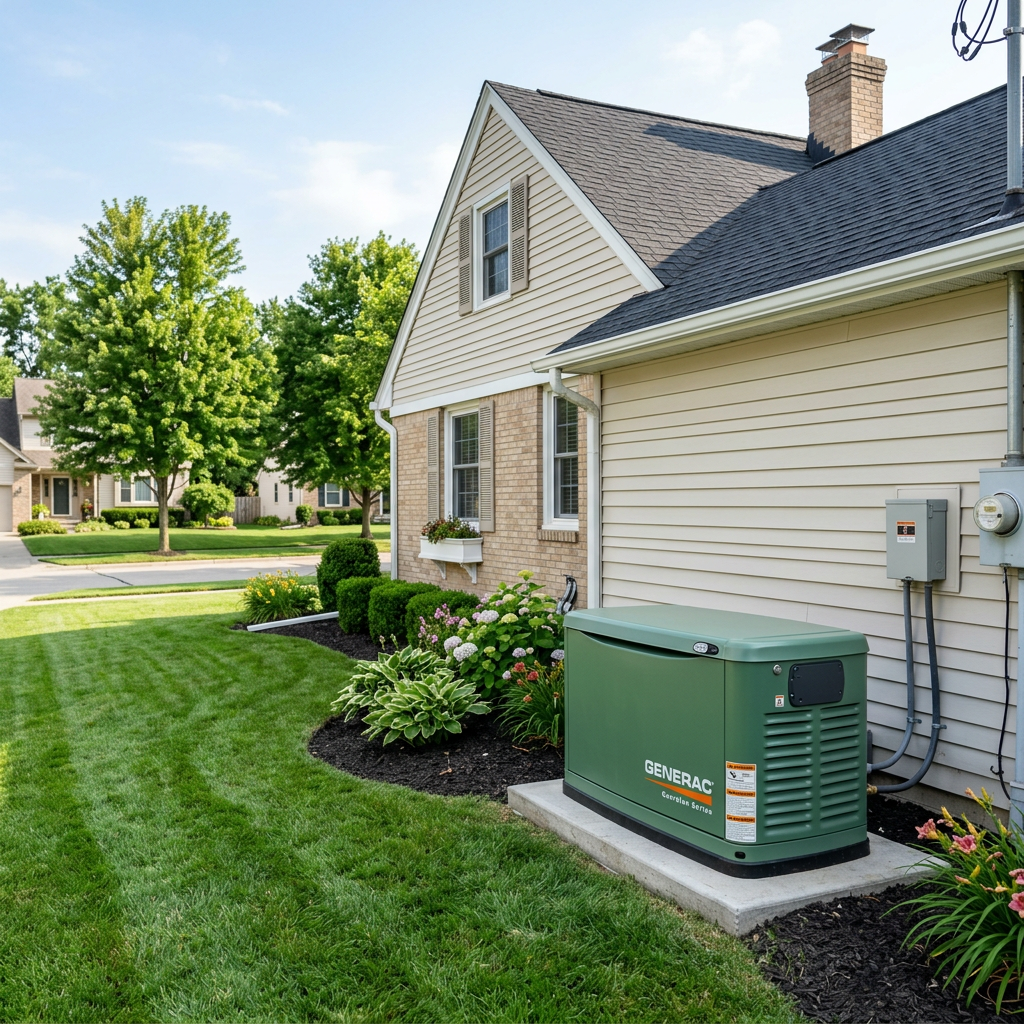
Placement and clearances — Generators must be positioned per code, at safe distances from windows, doors, and other structures.
The Generator Installation Process
Initial Consultation & Assessment
When you call a local electrician for generator installation, the first step is a site visit and consultation. The installer evaluates your home's electrical service, discusses your backup power needs, and recommends appropriate equipment size. This consultation is typically free and takes 30-60 minutes.
Equipment Selection
Based on your needs and budget, you'll choose between portable generators, essential-circuit standby systems (7-12kW), or whole-home standby generators (14-20kW+). Brand options include Generac, Briggs & Stratton, Kohler, and Champion. Your installer can explain the pros and cons of each approach and help you select the right fit.
Permitting
Your electrician pulls the necessary permits from your local building department. This typically takes 1-2 weeks. Permits ensure that work meets current electrical codes and will be inspected for safety.
Concrete Pad Preparation
If installing a standby generator, a level concrete pad (typically 4-6 inches thick) is poured where the generator will sit. This takes several days to cure before installation proceeds.
Fuel System Installation
For standby systems, your electrician coordinates with a licensed plumber or gas fitter to connect the generator to your natural gas line or install a propane tank. Fuel lines must be pressure-tested and properly routed per code.
Electrical Installation
The electrical work involves:
- Installing an automatic transfer switch (ATS) in your electrical panel
- Running conduit and electrical cable from the panel to the generator location
- Connecting the generator to the ATS and fuel supply
- Installing grounding rods and proper grounding connections
- Testing all connections and safety features
This typically takes 1-2 days for a standby system.
Testing & Commissioning
Once installation is complete, the system is thoroughly tested:
- Power-on test to confirm the generator starts
- Transfer switch test to confirm automatic switchover works properly
- Load test to confirm the generator can handle your home's electrical load
- Fuel system pressure and flow testing
- Building department inspection
After inspection approval, you receive training on how to use the system, understand the transfer switch controls, and know how to maintain the generator going forward.
Timeline for Generator Installation
Portable Generator Setup: 1-2 hours (if just plugging in; longer if integrating with home electrical system via inlet box)
Essential-Circuit Standby System: 3-5 days total, including:
- Permitting: 1-2 weeks
- Concrete pad (if needed): 1-2 days, plus curing time
- Installation: 1-2 days
- Inspection: 1 day
Whole-Home Standby System: 4-7 days total, including same steps as essential-circuit but with larger equipment and more extensive electrical work
Generator Installation Costs
Portable Generator Inlet Box & Interlock Kit: $500–$1,500
Essential-Circuit Standby (7-12kW): $3,000–$6,000 total, including equipment
Whole-Home Standby (14-20kW): $5,500–$12,000+ total, including equipment
Permit & Inspection Costs: $150–$300 (varies by jurisdiction)
Costs vary significantly based on equipment brand, fuel source (natural gas vs. propane), installation complexity, and local labor rates.
Finding a Qualified Generator Installation Contractor
When searching for "generator installation near me," look for:
NC Electrical Licensing — The contractor should be a licensed North Carolina electrical contractor. Verify their license on the NC State Board of Examiners of Electrical Contractors website.
Gas/Plumbing Licensing — For fuel system work, confirm they work with licensed gas fitters or plumbers.
Insurance & Bonding — Ask for proof of general liability insurance and workers' compensation insurance.
Reviews & References — Check Google reviews, Better Business Bureau ratings, and ask for references from recent generator installations.
Written Estimates — Get detailed written estimates from at least two contractors before deciding.
Warranty — Ask about warranty coverage for both the equipment and the installation work.
Maintenance After Installation
Once your generator is installed, ongoing maintenance keeps it ready when you need it:
Monthly: Run the generator under load for 10-15 minutes to exercise the fuel system and engine
Annually: Have a professional service the generator, including filter changes, fuel system inspection, and load testing
Oil changes: Follow manufacturer recommendations (typically 50-200 hours of operation)
Fuel system: Keep fuel tanks filled and use fuel stabilizer in propane systems
Questions to Ask Your Installer
Before committing to generator installation, ask:
• What size generator do you recommend and why?
• What's the expected lifespan of this system?
• How often does it require maintenance?
• What happens if the transfer switch fails?
• Can I upgrade capacity later if needed?
• What warranty comes with the equipment and installation?
• How long until the system is operational?
Don't Wait for the Next Outage
Power outages can happen unexpectedly. The best time to arrange generator installation is before you need it — during good weather, with reasonable lead times and without emergency pricing.
If you're looking for generator installation near you, contact a licensed local electrician today. Most provide free consultations to assess your needs and recommend the right solution.
Dausman Electric serves Winston-Salem, Greensboro, High Point, and surrounding Triad communities with professional generator installation, maintenance, and service. Call (336) 978-7844 for a free generator assessment.