Why Circuit Breakers Trip — and Why That's Actually a Good Thing
A tripping circuit breaker is annoying. But before you get frustrated, understand what just happened: the breaker detected a potentially dangerous condition and cut power to protect your wiring and your home from a fire. Breakers are designed to trip. That's their entire job.
The question isn't why it tripped — it's what caused it to trip, and whether that cause is something simple you can address yourself or something that needs a licensed electrician.
Here are the 7 most common reasons circuit breakers trip in Winston-Salem homes, how to diagnose each one, and what to do about it.
1. Overloaded Circuit (Most Common Cause)
What it is: You're drawing more amperage than the circuit is rated for. A 15-amp circuit running a space heater (12.5 amps), a hair dryer (12 amps), and a phone charger (1 amp) simultaneously is asking for 25+ amps on a 15-amp circuit. The breaker trips to prevent the wiring from overheating.
How to diagnose it: The breaker tripped while you were actively using multiple appliances on the same circuit. Resetting the breaker holds — until you repeat the same combination of loads.
What to do: Redistribute loads across multiple circuits. Move the space heater or hair dryer to an outlet on a different circuit (different room, different breaker). If overloading happens regularly on the same circuit, have an electrician add a dedicated circuit for the high-draw appliance.
2. Short Circuit
What it is: A hot wire contacts a neutral wire, creating a direct low-resistance path for current. This causes a sudden massive current surge — the breaker trips immediately and decisively. Short circuits can be caused by damaged appliance cords, faulty outlets, or wiring failures inside walls.
How to diagnose it: The breaker tripped the instant you plugged something in or turned on a switch. You may have heard a pop or seen a flash. The breaker trips again immediately when reset.
What to do: Unplug all devices from the circuit. If the breaker holds when reset with nothing plugged in, test each device individually — one of them has a faulty cord or internal short. If the breaker trips even with nothing plugged in, the short is in the wiring itself. Stop resetting and call a licensed electrician.
3. Ground Fault
What it is: Similar to a short circuit, but the hot wire is contacting a grounded surface (the metal housing of an appliance, a wet floor, or a grounded wire) instead of a neutral wire. Common in kitchens, bathrooms, and garages where moisture is present.
How to diagnose it: Breaker trips when using appliances in wet areas. A GFCI outlet on the circuit may be tripping instead of the breaker.
What to do: Check for moisture around outlets or appliances. Test and reset any GFCI outlets on the circuit. If the problem persists, have an electrician inspect for wiring damage or missing GFCI protection.
4. Aging or Faulty Breaker
What it is: Breakers are mechanical devices that wear out over time. An old breaker may trip under loads it was previously fine with, may trip randomly, or may fail to reset properly. Most breakers last 20–30 years — many older Winston-Salem homes have panels with original breakers from the 1980s or earlier.
How to diagnose it: The breaker trips inconsistently — sometimes under normal loads with no pattern, or trips and won't hold its reset position. The panel is 25+ years old.
What to do: Have a licensed electrician test and replace the breaker. A single breaker replacement is typically $75–$200. If multiple breakers are failing or the panel is a Federal Pacific or Zinsco brand, the panel itself should be replaced.
5. Undersized Circuit Wiring
What it is: The circuit was originally wired with wire gauge too small for the current breaker rating — or an appliance's power draw has grown beyond what the circuit was designed for. Running 20 amps through 15-amp wiring causes the wiring to overheat before the breaker trips.
How to diagnose it: Outlets on the circuit feel warm, the breaker trips under loads that seem reasonable, or you notice discoloration around outlet covers.
What to do: Call a licensed electrician. Undersized wiring is a fire hazard that isn't solved by resetting the breaker. The circuit needs to be properly assessed and possibly rewired with the correct gauge wire.
6. Loose Connections
What it is: Loose wire connections at outlets, switches, junction boxes, or the panel itself create resistance and arcing. Arcing generates heat — enough to melt wire insulation and start a fire — and can cause a breaker to trip or an AFCI breaker to trip when it detects the arc signature.
How to diagnose it: An AFCI breaker trips repeatedly. Outlets or switches feel warm. You hear buzzing or clicking from outlets or the panel. Lights flicker on the affected circuit.
What to do: Call a licensed electrician. Loose connections inside walls and panels are not a DIY fix. An electrician can identify and tighten all connections on the affected circuit.
7. Defective Appliance
What it is: A malfunctioning appliance — one with damaged internal wiring, a failing motor, or a faulty heating element — draws excessive current or creates a short. The problem follows the appliance, not the circuit.
How to diagnose it: The breaker only trips when one specific appliance is plugged in, regardless of which outlet you use.
What to do: Stop using the appliance. Have it serviced or replace it. This is one of the few breaker-tripping scenarios that's truly the appliance's fault, not your electrical system's.
How to Safely Reset a Tripped Breaker
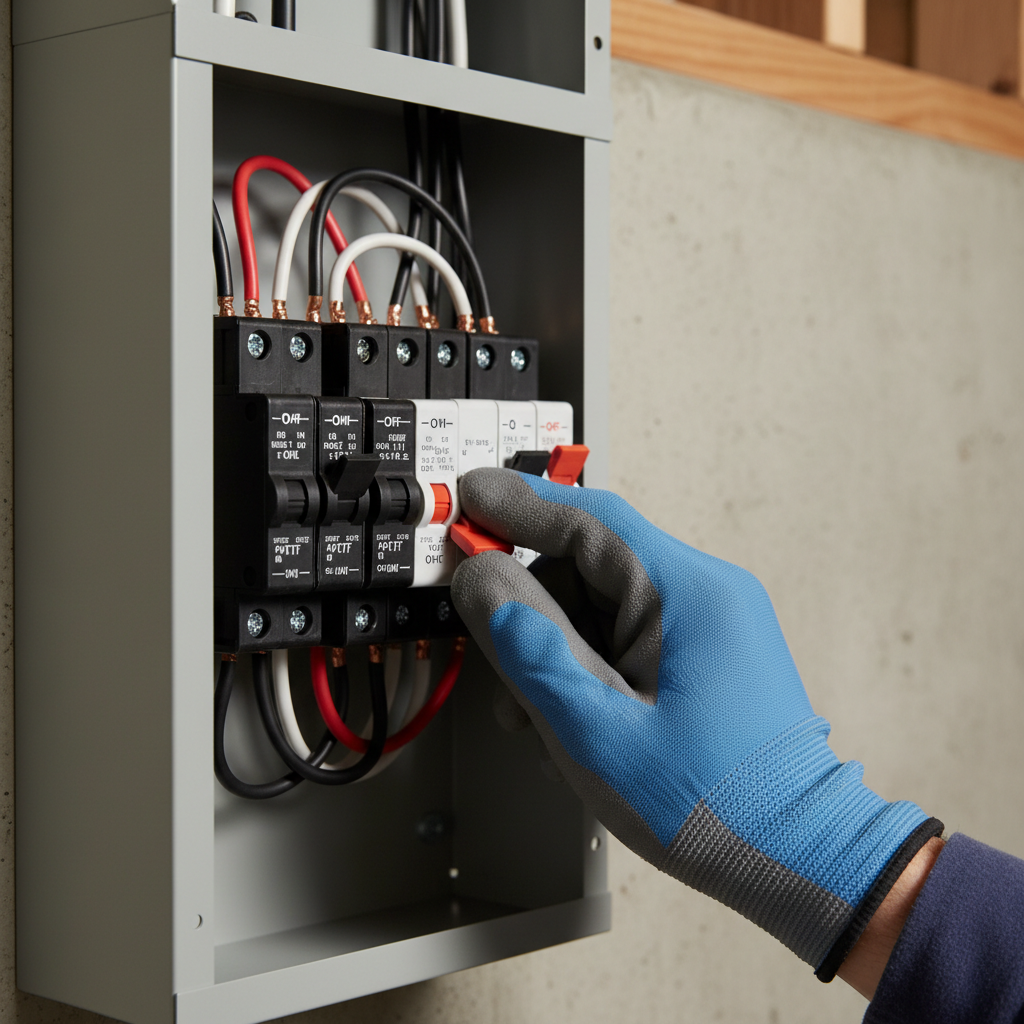
Step 1: Identify which breaker tripped — it will be in a middle position between ON and OFF, or visibly flipped toward OFF.
Step 2: Before resetting, reduce the load on the circuit — unplug appliances or turn off lights.
Step 3: Push the breaker firmly to the full OFF position first, then push it back to ON. Many people skip the "fully off first" step, which causes the reset to fail.
Step 4: If the breaker immediately trips again on reset, stop. Do not keep resetting it — something is genuinely wrong. Call an electrician.
Warning Signs That Mean Call an Electrician Immediately
- Burning smell from the panel, any outlet, or any switch
- Breaker trips with a pop or flash
- Breaker won't stay reset
- Multiple breakers tripping at the same time
- Breaker feels hot to the touch
- You see scorch marks on the panel or outlets
- The problem started after a recent storm or power outage
When Frequent Tripping Signals a Bigger Panel Problem
If you're regularly dealing with tripping breakers across multiple circuits, your panel may simply be undersized for your home's electrical demand. This is very common in Winston-Salem homes built before 1990 with 100-amp service — these panels weren't designed for modern HVAC systems, EV chargers, and the appliance loads of a contemporary household.
A 200-amp panel upgrade solves chronic overloading problems at the root. Dausman Electric can assess your panel capacity and provide a written estimate for an upgrade if needed.
Schedule a Free Electrical Assessment
If your breakers are tripping regularly and you're not sure why, Dausman Electric offers free electrical safety inspections for new customers in Winston-Salem, Forsyth County, and the Triad. We'll identify the cause and give you a clear path to a fix.
📞 Call (336) 978-7844
🌐 Schedule online
See also: Complete Guide to Panel Upgrades in Winston-Salem | GFCI Outlets Guide | 2026 Electrical Safety Tips