Home Rewiring in Winston-Salem, NC: Complete Cost & Process Guide
If you own an older home in Winston-Salem — especially in neighborhoods like Ardmore, West End, Washington Park, Buena Vista, or Old Town — there's a real chance your electrical wiring is past its safe serviceable life. Rewiring is a significant investment, but it's one of the most important safety upgrades you can make to protect your family and your property.
This guide covers everything Winston-Salem homeowners need to know: what rewiring means, when it's necessary, what it costs, what the process looks like day by day, and how to minimize disruption to your daily life.
What Does "Rewiring a Home" Actually Mean?
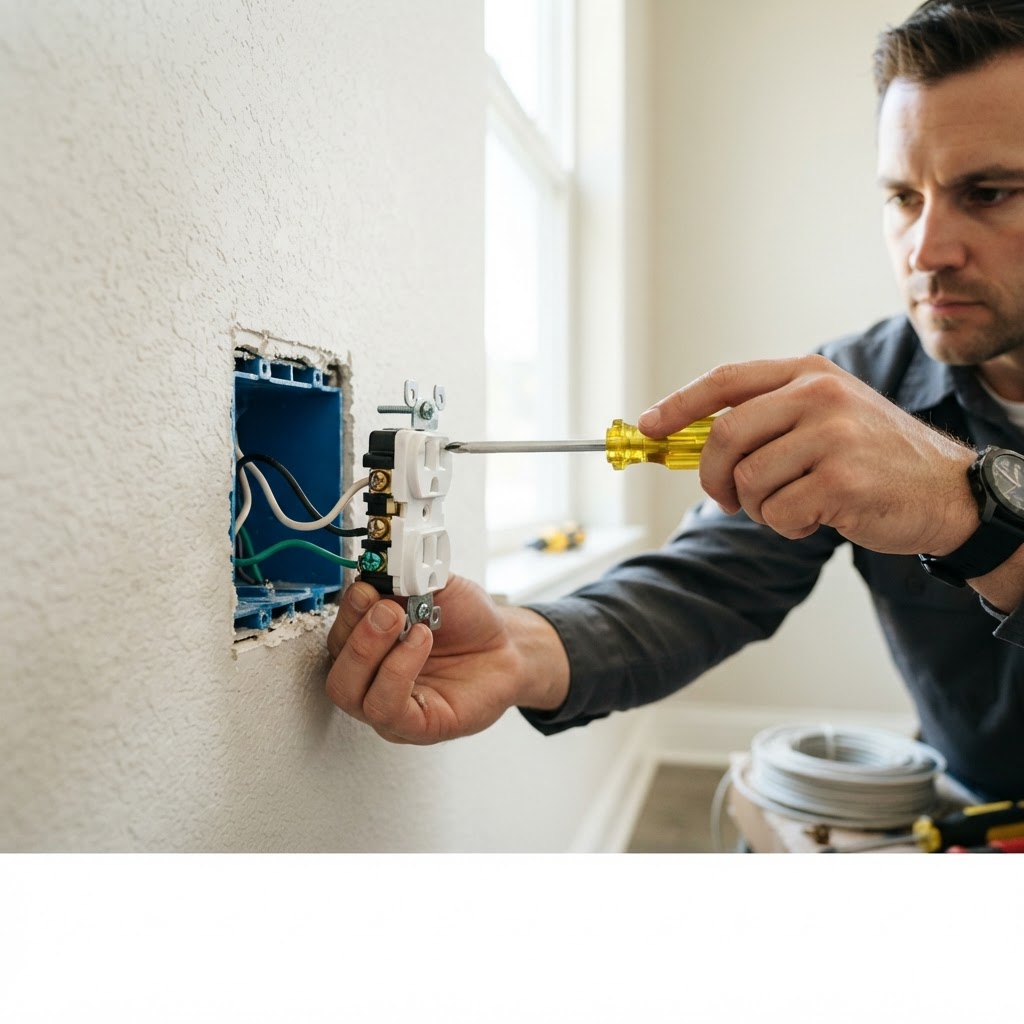
Rewiring a home means removing all or most of the existing electrical wiring behind your walls and replacing it with modern copper NM (Romex) cable that meets current NC Electrical Code. A full rewire typically includes:
- Removing old wiring (knob-and-tube, cloth-insulated, or aluminum) from walls, attics, and crawl spaces
- Running new 12 AWG and 14 AWG copper cable to every outlet, switch, and fixture
- Installing new device boxes, outlets, and switches
- Upgrading the electrical panel if it's outdated or undersized
- Adding AFCI and GFCI protection where required by current code
- Adding grounded three-prong outlets throughout the home
- Installing interconnected smoke and CO detectors to current code
Partial Rewire vs. Full Rewire
You don't always need a complete home rewire. If only part of your home has dangerous wiring — for example, knob-and-tube in the attic but modern wiring in a renovated kitchen — a partial rewire addresses the high-risk circuits while leaving safe wiring in place. A licensed electrician can assess which areas need attention and develop a prioritized plan.
That said, if your home has original wiring from the 1960s or earlier throughout, a full rewire is usually the safest and most cost-effective long-term solution. Piecemeal rewiring over many years creates inconsistencies and code compliance issues.
When Is Rewiring Necessary?
Knob-and-Tube Wiring (Pre-1950)
Knob-and-tube (K&T) wiring was the standard before 1950. It consists of individual copper conductors run separately through walls, supported by ceramic knobs and passing through ceramic tubes. It has no ground wire and no protective sheathing. The rubber insulation becomes brittle and cracks over decades, potentially exposing live wires. K&T wiring must never be covered with insulation — many older Winston-Salem attics have blown-in insulation encasing K&T wiring, dramatically increasing fire risk. If your home has active K&T wiring, rewiring is not optional — it's a safety imperative.
Aluminum Wiring (1965–1973)
During the copper shortage of the mid-1960s through early 1970s, many homes were wired with aluminum conductors instead of copper. Aluminum expands and contracts differently than copper, causing connections to loosen over time. Loose aluminum connections create resistance, heat buildup, and fire risk. If your home was built during this period, have it inspected. Remediation options range from pigtailing (connecting short copper pigtails to aluminum wires at each device) to full rewiring.
Cloth-Insulated Wiring (1930s–1960s)
Cloth-insulated wiring has copper conductors wrapped in cloth or rubber insulation. Over decades, the cloth becomes brittle, cracks, and falls away — exposing live conductors inside walls. Rodents and insects can damage the cloth further. If you can see cloth-insulated wiring in your attic or basement with cracked or missing insulation, rewiring is needed.
Insurance Requirements
Many NC insurance companies won't write new policies for homes with knob-and-tube wiring or active aluminum wiring, or they charge significantly higher premiums. If your insurance company has flagged your wiring, rewiring resolves the issue and can reduce your premiums.
Two-Prong Ungrounded Outlets Throughout
If every outlet in your home is a two-prong ungrounded outlet, your wiring lacks a ground conductor entirely. While GFCI outlets can provide shock protection without a ground wire, true grounding protects your electronics and provides the safest electrical system. Full rewiring adds proper grounding throughout.
Home Sale Preparation
Buyers' home inspectors routinely flag outdated wiring as a serious defect. Rewiring before listing eliminates this negotiating point and can increase your home's value by more than the cost of the rewire.
Cost Breakdown for Rewiring a Home in Winston-Salem (2026)
House rewiring costs in Winston-Salem and the Triad area depend primarily on home size, accessibility, and the type of wiring being removed. Here's what to expect in 2026:
1,000–1,500 sq ft (small home or cottage): $8,000–$12,000
1,500–2,000 sq ft (typical 3-bedroom home): $12,000–$16,000
2,000–2,500 sq ft (larger home): $16,000–$20,000
2,500–3,500 sq ft (large home): $20,000–$28,000+
Rough estimate: $5–$10 per square foot for labor and materials combined.
What Affects the Final Price?
House size (square footage): The larger your home, the more wire, labor, and materials required.
Wiring type being removed: Knob-and-tube requires careful, time-consuming removal. Cloth-insulated is slightly easier. Older plastic-insulated is quickest to remove.
Accessibility: Homes with crawl spaces, basements, or accessible attics cost less. Homes with solid concrete walls, buried basements, or tight attics cost more because electricians must cut into walls in multiple places to run new wiring.
Need for panel upgrade: Many homes being rewired also need electrical panel upgrades (100A to 200A). A panel upgrade adds $1,500–$3,000+ to the total.
Number of outlets, switches, and fixtures: Modern code requires more outlets than older homes had. Upgrading from 2–3 outlets per room to modern standards adds material and labor cost.
Local labor rates and permitting: Winston-Salem electricians typically charge $50–$75 per hour for rewiring work. Forsyth County permit costs are typically $150–$300.
Breaking Down the Costs
Labor (typically 60–70% of total cost): A complete rewire of a 2,000 sq ft home typically takes 4–7 weeks (200–350+ hours). At $50–$75/hour, that's $10,000–$26,000 in labor.
Materials (typically 20–30% of total cost): Copper Romex cable, outlets, switches, breakers, conduit, boxes, and other components. Copper wire costs have increased during 2024–2026, adding 10–15% compared to prior years.
Permits and inspections (typically 2–5% of total cost): Forsyth County permits ($150–$300) plus building inspector fees ($50–$100). Non-negotiable — unpermitted work can void insurance.
Disposal of old wiring (typically 1–3% of total cost): Safe removal and proper disposal. Copper from old wiring may offset some disposal costs.
Partial Rewiring Costs
Rewiring one room or circuit: $1,500–$3,000
Rewiring two–three rooms: $4,000–$8,000
Rewiring main level only: $7,000–$12,000
The Rewiring Process: What to Expect Day by Day
Phase 1: Assessment and Planning (Week 0)
Dausman Electric conducts a thorough inspection of your home's existing wiring, identifies all circuits that need replacement, maps out outlet and switch locations, and provides a detailed written estimate. We discuss your timeline, which rooms are highest priority, and how to minimize disruption.
Phase 2: Permitting (Week 1)
We submit the electrical permit application to Forsyth County Inspections. Permit issuance typically takes 1–3 business days. The permit fee ($150–$300) is included in your estimate.
Phase 3: Preparation (Day 1–2)
On the first day of work, we protect your floors with drop cloths, move furniture away from walls as needed, and set up dust containment in work areas. We identify and mark all circuits that will be de-energized during the project. You'll know which outlets and rooms will be without power on each day.
Phase 4: Old Wiring Removal (Days 2–5)
We carefully remove old wiring from accessible areas — attics, crawl spaces, basements, and behind outlet boxes. For knob-and-tube wiring, this requires extra care to avoid damaging surrounding structure. Old wiring is properly disposed of; copper is recycled where possible.
Phase 5: New Wiring Installation (Days 3–15+)
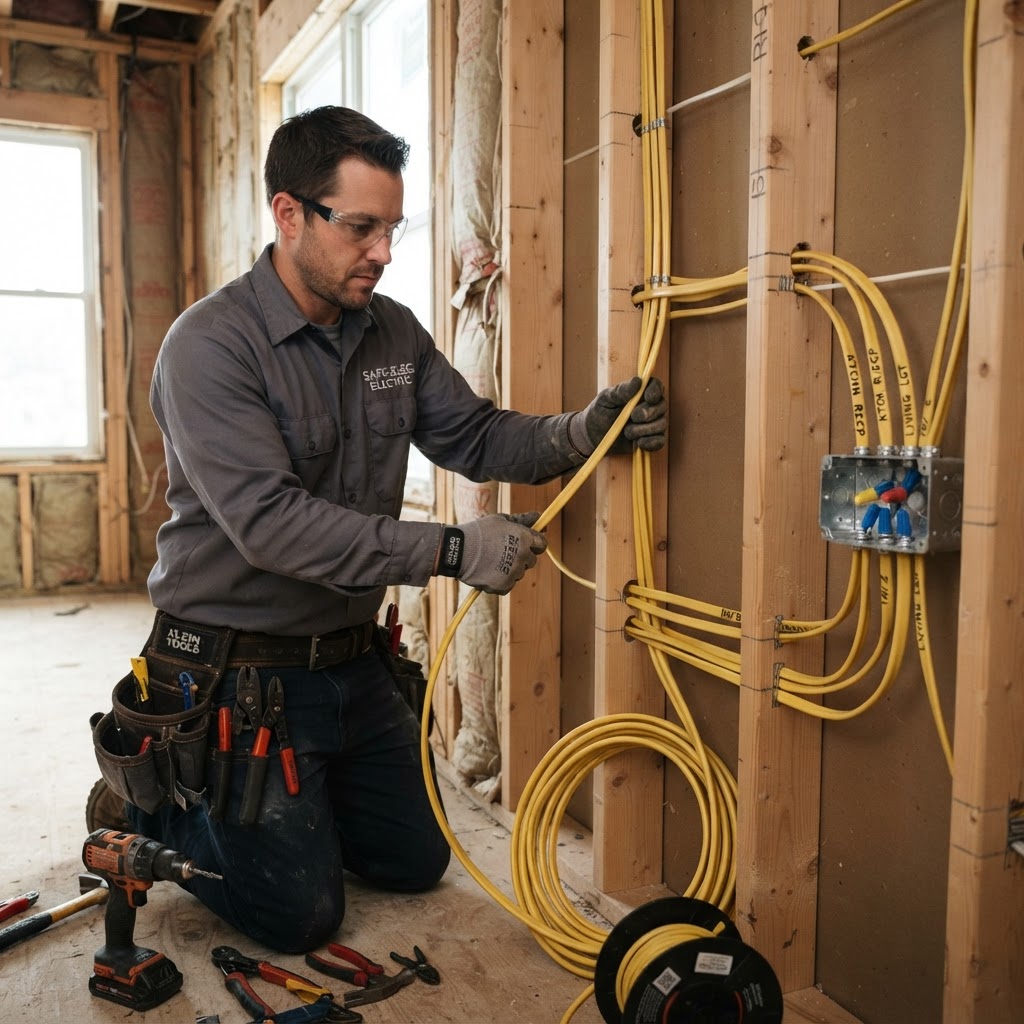
New copper NM cable is run from the panel to each outlet, switch, and fixture location. We fish wire through walls, attics, and crawl spaces — making strategic access cuts in drywall where necessary (these are patched by your contractor or our team afterward). New device boxes are installed, outlets and switches are connected, and AFCI/GFCI protection is added per code.
Phase 6: Panel Work (If Needed)
If your panel is being upgraded as part of the project, this is coordinated with Duke Energy for disconnection and reconnection. The old panel is removed, the new panel is installed, and all circuits are redistributed with proper labeling.
Phase 7: Rough-In Inspection
Before walls are closed, Forsyth County building inspector performs a rough-in inspection — verifying wire routing, box placement, and connections before drywall patches are applied. Any items the inspector flags are corrected immediately.
Phase 8: Device Installation and Final Testing (Days 15–20+)
Outlets, switches, and fixtures are installed and tested. Every circuit is verified for proper voltage, polarity, grounding, and GFCI/AFCI function. Smoke and CO detectors are installed and interconnected.
Phase 9: Final Inspection
Forsyth County performs the final inspection. The inspector verifies all work meets NC Electrical Code. Once approved, your rewire is complete and your home has modern, safe, code-compliant wiring.
How to Minimize Disruption During Rewiring
Rewiring is invasive — there's no way around it. But you can minimize the impact on your daily life:
- Phase the project: If budget allows, rewire one floor or section at a time. This keeps parts of your home fully functional throughout.
- Plan for power outages: We'll tell you in advance which circuits will be off each day. Charge devices, plan meals that don't require electric cooking, and consider staying elsewhere on the most disruptive days.
- Clear access: Move furniture away from walls before we arrive. Remove pictures, artwork, and window treatments from rooms being worked on.
- Communicate with your electrician: Let us know which rooms you need powered each evening. We can prioritize critical circuits (refrigerator, bedroom, bathroom) for same-day reconnection.
- Bundle with other work: If you're also planning drywall repair, painting, or a panel upgrade, coordinate these together to avoid multiple rounds of disruption.
NC Permit Requirements and Inspection Process
In Forsyth County, electrical rewiring requires an electrical permit and two inspections:
- Rough-in inspection: Conducted after new wiring is installed but before walls are closed. Verifies wire routing, box placement, and connections.
- Final inspection: Conducted after all devices, outlets, switches, and fixtures are installed. Verifies proper function, grounding, GFCI/AFCI protection, and code compliance.
Dausman Electric handles all permitting and inspection coordination on your behalf. You don't need to interact with the county at all.
Is House Rewiring Worth the Cost?
Safety: Outdated wiring causes approximately 25,000 home fires per year in the US. Rewiring eliminates this fire and electrocution risk.
Insurance coverage: Many insurers won't renew policies for homes with knob-and-tube or aluminum wiring. A complete rewire can reduce your insurance costs and ensure continuous coverage.
Home resale value: Buyers' inspectors flag outdated wiring as a serious defect. Rewiring before selling eliminates this negotiating point and can increase home value by more than the cost of the rewire.
Modern electrical capacity: New wiring supports air conditioning, electric vehicles, high-powered appliances, and modern devices that old wiring can't safely handle.
Get a Free Rewiring Estimate for Your Winston-Salem Home
Dausman Electric is a licensed NC electrical contractor specializing in complete home rewiring, partial circuit updates, and knob-and-tube removal throughout Winston-Salem, Forsyth County, and the Triad area. We provide free written estimates and can often schedule inspections within 48 hours.
Call (336) 978-7844 or request an appointment online. We'll assess your home's wiring, identify safety risks, and provide a clear breakdown of costs and timeline.
See also: Panel Upgrade Guide | House Rewiring Cost Guide | Knob and Tube Wiring Guide