EV Charger Installation in Winston-Salem, NC: The Complete 2026 Guide
Electric vehicle adoption across Winston-Salem and the Triad has exploded in 2026. Tesla Model Y and Model 3 are now among the most common vehicles on the road in Forsyth County. Ford F-150 Lightnings, Chevy Equinox EVs, Rivians, and Hyundai IONIQ 5s are everywhere. If you've made the switch — or you're about to — one of the first questions you'll face is: how do I charge this thing at home?
The short answer: you need a Level 2 home charger. The standard 120V outlet in your garage adds only 3–5 miles of range per hour. That's barely enough to recover a daily commute overnight. A Level 2 charger (240V, 40–50 amps) adds 25–35 miles of range per hour — enough to fully charge most EVs while you sleep.
This guide covers everything you need to know about EV charger installation in Winston-Salem, NC: the technology, the cost, the permits, the brands, the tax credits, and exactly how Dausman Electric handles the project from start to finish.
Level 1 vs Level 2 vs Level 3: What Do You Need at Home?
Level 1 (120V — standard household outlet): Adds 3–5 miles of range per hour. A Tesla Model Y with a 75 kWh battery takes 40–60 hours to fully charge from empty. This is fine for plug-in hybrid owners who drive short distances and charge nightly. For full EV owners, Level 1 is impractical for daily use — it simply can't recover a day's worth of driving overnight.
Level 2 (240V — dedicated circuit): Adds 20–35 miles of range per hour depending on the charger's amperage and your vehicle's onboard charger. Most EVs reach a full charge in 4–8 hours. This is the standard home charging solution recommended by every major EV manufacturer. Level 2 requires a dedicated 240V, 40–60 amp circuit installed by a licensed electrician — not a DIY project.
Level 3 / DC Fast Charging (480V+): Commercial-only charging stations that can charge an EV to 80% in 20–40 minutes. These are not available for home installation — they require industrial-grade electrical service and cost tens of thousands of dollars to install. Think of these as the EV equivalent of a gas station, not something you'd put in your garage.
For home charging in Winston-Salem, the answer is almost always Level 2. Here's what that involves.
Does Your Electrical Panel Support an EV Charger?
This is the single most important question — and it's where many EV owners hit their first roadblock. A Level 2 EV charger requires a dedicated 40–60 amp, 240V circuit. That circuit needs space in your electrical panel, and your panel needs enough total capacity to handle the additional load alongside everything else in your home.
The 100-Amp Panel Problem
Many Winston-Salem homes built before 1990 — especially in neighborhoods like Ardmore, West End, Washington Park, and Buena Vista — still have 100-amp electrical panels. A 100-amp panel serving a home with central HVAC, electric water heater, refrigerator, dryer, and standard household appliances often has very little spare capacity. Adding a 50-amp EV charger circuit to an already-loaded 100-amp panel is asking for trouble: nuisance breaker trips, voltage drops, and potential safety hazards.
If your home has a 100-amp panel, you'll likely need a panel upgrade to 200 amps before an EV charger can be safely installed. This adds $1,500–$2,500 to the project but is non-negotiable for safety and code compliance.
The 200-Amp Sweet Spot
Homes built after 2000, or older homes that have already had a panel upgrade, typically have 200-amp service. A 200-amp panel almost always has room for a 50-amp EV charger circuit — assuming you don't already have multiple high-draw loads like a hot tub, tankless water heater, or another EV charger. Dausman Electric performs a load calculation during your free assessment to confirm.
Signs Your Panel Needs an Upgrade Before EV Charger Installation
- Panel is rated at 100 amps or less
- Panel is full — no empty breaker slots
- Breakers trip when running AC, dryer, and other appliances simultaneously
- Panel is a Federal Pacific or Zinsco brand (these need replacement regardless)
- Lights dim when major appliances cycle on
Cost Breakdown: EV Charger Installation in Winston-Salem (2026)
Here's what Winston-Salem homeowners can expect to pay for Level 2 EV charger installation in 2026:
Straightforward installation (200-amp panel, garage wall near panel, short circuit run): $400–$800
This covers the electrician's labor, conduit and wire, a 50-amp breaker, the NEMA 14-50 outlet or hardwired connection, permit, and inspection. You supply the charger unit separately.
Installation with longer circuit run or conduit required: $600–$1,200
If your panel is on the opposite side of the house from the garage, or the circuit needs to run through finished space, labor and materials increase.
Panel upgrade (100A → 200A) + EV charger installation: $2,000–$3,500 total
Combines a panel upgrade ($1,500–$2,500) with the EV charger circuit ($400–$1,000). This is common in older Winston-Salem homes.
EV charger unit (hardware): $200–$800
See the brand comparison below. The charger is purchased separately from installation.
Permit and inspection (Forsyth County): $75–$150
Required by code. Dausman Electric handles this on your behalf.
Total project cost (installation + charger): $600–$2,000 for homes with an adequate panel; $2,500–$4,500 for homes needing a panel upgrade.
Best EV Charger Brands and Models for 2026
You don't need to buy your charger from a dealership at a markup. Here's what we recommend to Winston-Salem EV owners:
Grizzl-E Classic (~$200): The best value on the market. Built in Canada, weatherproof aluminum casing, no WiFi needed — just plug and charge. 40-amp output. Ideal for garage or outdoor installation. This is the charger we recommend most often.
Emporia EV Charger (~$250): Best for homeowners who want energy monitoring and smart home integration. The Emporia app tracks charging costs and energy usage. 40-amp output, J1772 connector (works with all EVs except Tesla, which needs an adapter).
ChargePoint Home Flex (~$400): Premium option with adjustable amperage (16–50 amps) and an excellent app. The most flexible charger if you want to future-proof or have a vehicle with a high-amperage onboard charger.
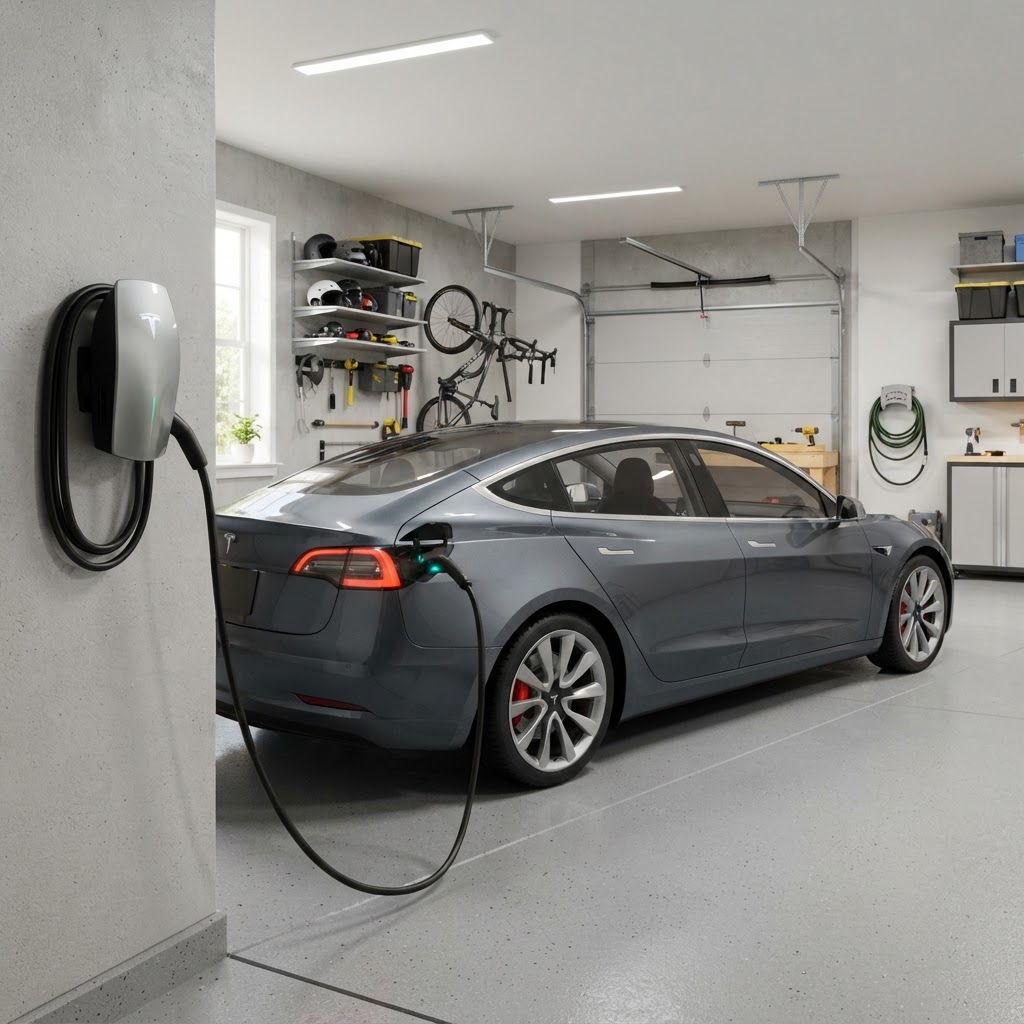
Tesla Wall Connector (~$425): The best choice for Tesla owners. Integrates seamlessly with the Tesla app, supports up to 48 amps, and can be networked with multiple Wall Connectators for load sharing. Note: Tesla Wall Connectors can charge non-Tesla EVs with a $50 adapter, but most non-Tesla owners are better served by a J1772 charger.
JuiceBox 40 (~$350): Smart features, WiFi connectivity, and broad compatibility. A solid mid-range option with good energy tracking.
All of these chargers use the J1772 connector standard (or Tesla's proprietary connector with an adapter). Your electrician can hardwire any of them or install a NEMA 14-50 outlet for plug-in models.
Federal Tax Credits and NC Incentives
Federal EV Charger Tax Credit (Form 8911)
The Alternative Fuel Vehicle Refueling Property Credit allows homeowners to claim 30% of the total cost of EV charger installation (equipment + labor) as a federal tax credit, up to $1,000. This credit applies to installation in your primary residence and is claimed using IRS Form 8911.
For a $1,000 installation, that's a $300 tax credit. For a $2,000 panel upgrade + charger project, you can claim up to $1,000. Consult your tax professional for your specific situation.
Duke Energy Rebates
Duke Energy Carolinas and Duke Energy Progress have offered EV charger rebates for residential customers in some years. These programs change annually — check Duke Energy's current EV incentive programs to see what's available in 2026. Dausman Electric can help you understand which rebates your installation qualifies for.
NC State Incentives
North Carolina does not currently offer a state-level EV charger installation tax credit, but some local utility cooperatives and municipalities offer rebates. Check with your local utility for current programs.
Forsyth County Permit Requirements
EV charger installation in Winston-Salem and Forsyth County requires an electrical permit and final inspection. Here's what the process looks like when Dausman Electric handles your installation:
Step 1: Permit Application. We submit the electrical permit application to Forsyth County Inspections. Permit issuance typically takes 1–3 business days. The permit fee ($75–$150) is included in your written estimate.
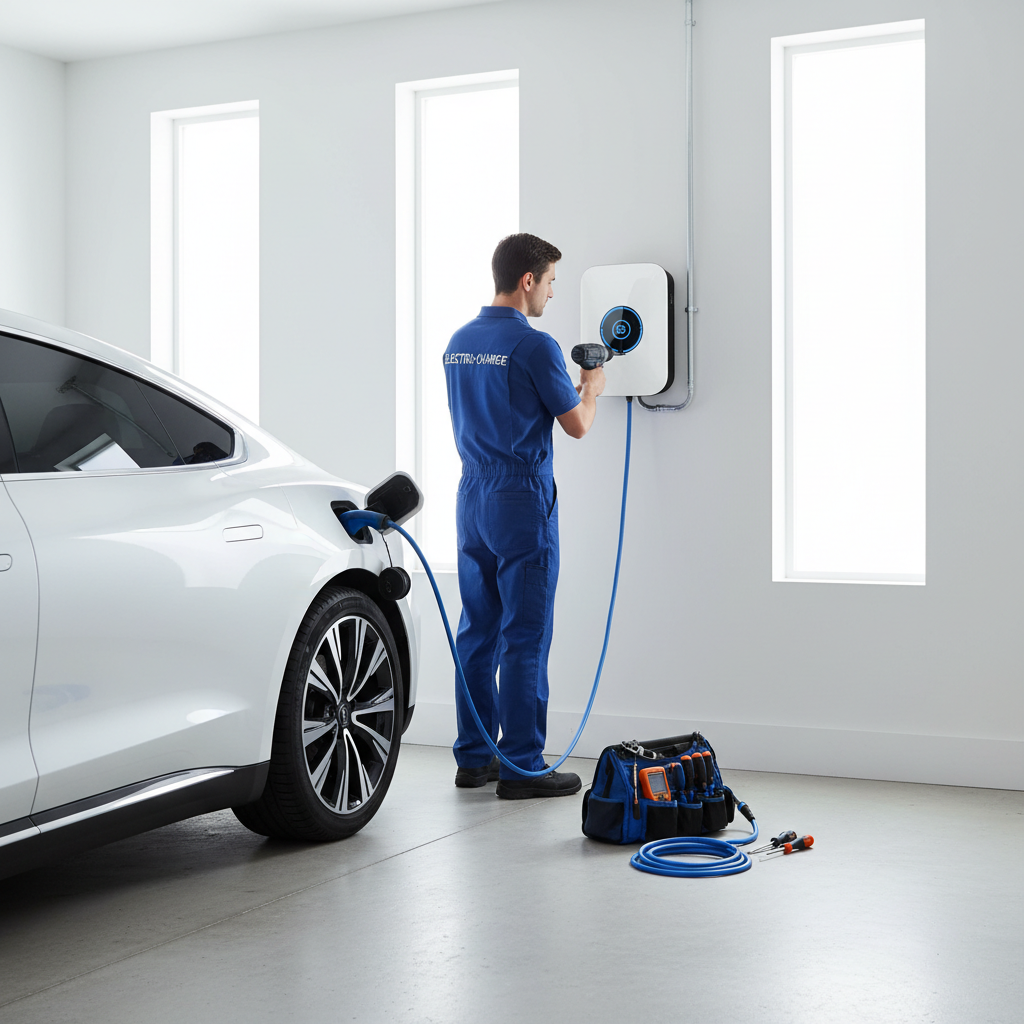
Step 2: Installation. Our licensed electrician installs the dedicated circuit, mounts the charger or NEMA 14-50 outlet, and wires the connection to your panel. This typically takes 2–4 hours for a straightforward installation.
Step 3: Final Inspection. Forsyth County building inspector performs a final inspection — typically same-day or next-day — to verify code compliance. The inspector checks wire gauge, breaker sizing, GFCI protection (if required), and proper grounding.
Step 4: Activation. Once inspection passes, your charger is ready to use. We walk you through how to operate it, connect it to your EV, and (if applicable) set up the companion app.
Hardwired vs NEMA 14-50 Outlet: Which Is Better?
NEMA 14-50 outlet: A 240V outlet (like a larger version of a standard outlet) that you plug your charger into. Pros: easy to swap chargers later, charger can be taken with you if you move, simpler installation. Cons: slightly less weatherproof for outdoor installations, the outlet itself is an additional failure point.
Hardwired: The charger is permanently wired directly into your electrical system with no outlet. Pros: more weatherproof, no plug to degrade, slightly cheaper (no outlet hardware), required for some high-amperage chargers. Cons: charger is fixed in place, harder to replace.
For most Winston-Salem garage installations, either approach works well. For outdoor installations (driveway charging), hardwired is preferred for weather resistance. Dausman Electric can advise based on your specific setup.
Indoor vs Outdoor EV Charger Installation
Garage installation (most common): Protected from weather, near the panel, and where most EVs are parked. Most Winston-Salem homeowners charge in their garage. This is the simplest and least expensive installation.
Driveway/outdoor installation: If you park outside or don't have a garage, the charger needs to be mounted outdoors on a post or wall. Requires a weatherproof charger (Grizzl-E, ChargePoint, and Tesla Wall Connector are all outdoor-rated) and proper weatherproofing of the electrical connection. Adds $100–$300 to the project cost.
Carport installation: Similar to outdoor but with some weather protection. Still requires outdoor-rated equipment.
How Dausman Electric Handles EV Charger Installation
We handle everything — you don't need to figure out permits, pull codes, or coordinate with the county. Here's our process:
Free Assessment: We start with a free electrical safety inspection. We evaluate your panel's capacity, available breaker space, and the distance from your panel to your charging location. We discuss your vehicle, driving habits, and charging needs to recommend the right charger and amperage.
Written Estimate: You receive a detailed written estimate covering all labor, materials, permit fees, and inspection coordination. No surprises.
Permit and Scheduling: We pull the Forsyth County permit and schedule your installation — typically within 1–2 weeks.
Installation Day: Our licensed electrician arrives on time, installs the dedicated circuit, mounts your charger or outlet, connects everything to your panel, and tests the system. Most installations are completed in a single visit.
Inspection: We coordinate the Forsyth County building inspection and address any items the inspector flags.
Activation: We walk you through using your new charger, connect it to your vehicle, and help you set up any companion apps.
Frequently Asked Questions
How long does EV charger installation take?
A straightforward installation (panel in the garage, short circuit run) takes 2–4 hours. Installations requiring a longer circuit run, conduit, or a panel upgrade take longer.
Do I need a permit for EV charger installation?
Yes. Electrical permits are required in Forsyth County and throughout NC for EV charger installation. Dausman Electric handles all permitting on your behalf.
Can I install an EV charger myself?
Installing a 240V, 50-amp circuit requires a licensed electrician and a permit in NC. DIY installation of high-amperage circuits is dangerous and creates liability. If something goes wrong — a fire, an electrocution, property damage — your insurance won't cover unpermitted electrical work.
Will an EV charger increase my electricity bill?
Yes, but significantly less than the equivalent cost in gasoline. Charging a Tesla Model Y from empty to full (75 kWh at NC's average rate of ~$0.12/kWh) costs about $9. That same distance in a comparable gas SUV would cost $40–$60. Most EV owners see their electricity bill increase by $30–$60 per month — far less than they spent on gas.
Can I charge two EVs at the same time?
Yes, but each charger needs its own dedicated circuit. If you have two EVs, we can install two chargers (each on its own circuit) or use a charger with load-sharing capability (like the Tesla Wall Connector, which can network multiple units to share a single circuit's capacity).
What if I move — can I take my charger with me?
If your charger is plugged into a NEMA 14-50 outlet, you can simply unplug it and take it with you. If it's hardwired, Dausman Electric can uninstall it and reinstall it at your new home. The NEMA 14-50 outlet stays in the house and can be a selling point for future EV-owning buyers.
Is my EV charger covered under my homeowner's insurance?
Yes — as long as the installation was permitted and performed by a licensed electrician. Unpermitted DIY installations may not be covered. Check with your insurance provider for specifics.
Ready to Install Your EV Charger?
Dausman Electric is a licensed NC electrical contractor serving Winston-Salem, Forsyth County, Guilford County, and the surrounding Triad area. We've installed EV chargers for Tesla, Ford, Chevy, Rivian, Hyundai, and BMW owners throughout the region — from straightforward garage installations to full panel upgrades with charger circuits.
We offer free assessments for new customers. We'll evaluate your panel, recommend the right charger and installation approach, and give you a clear written estimate — no pressure.
📞 Call (336) 978-7844 — same-day and next-day appointments often available.
🌐 Or schedule your free EV charger assessment online.
See also: EV Charger Installation Cost Guide | Complete Panel Upgrade Guide | EV Charger Installation Guide for NC